
Engineered Wooden Flooring: Benefits, Cost, Types & How to Choose the Right One
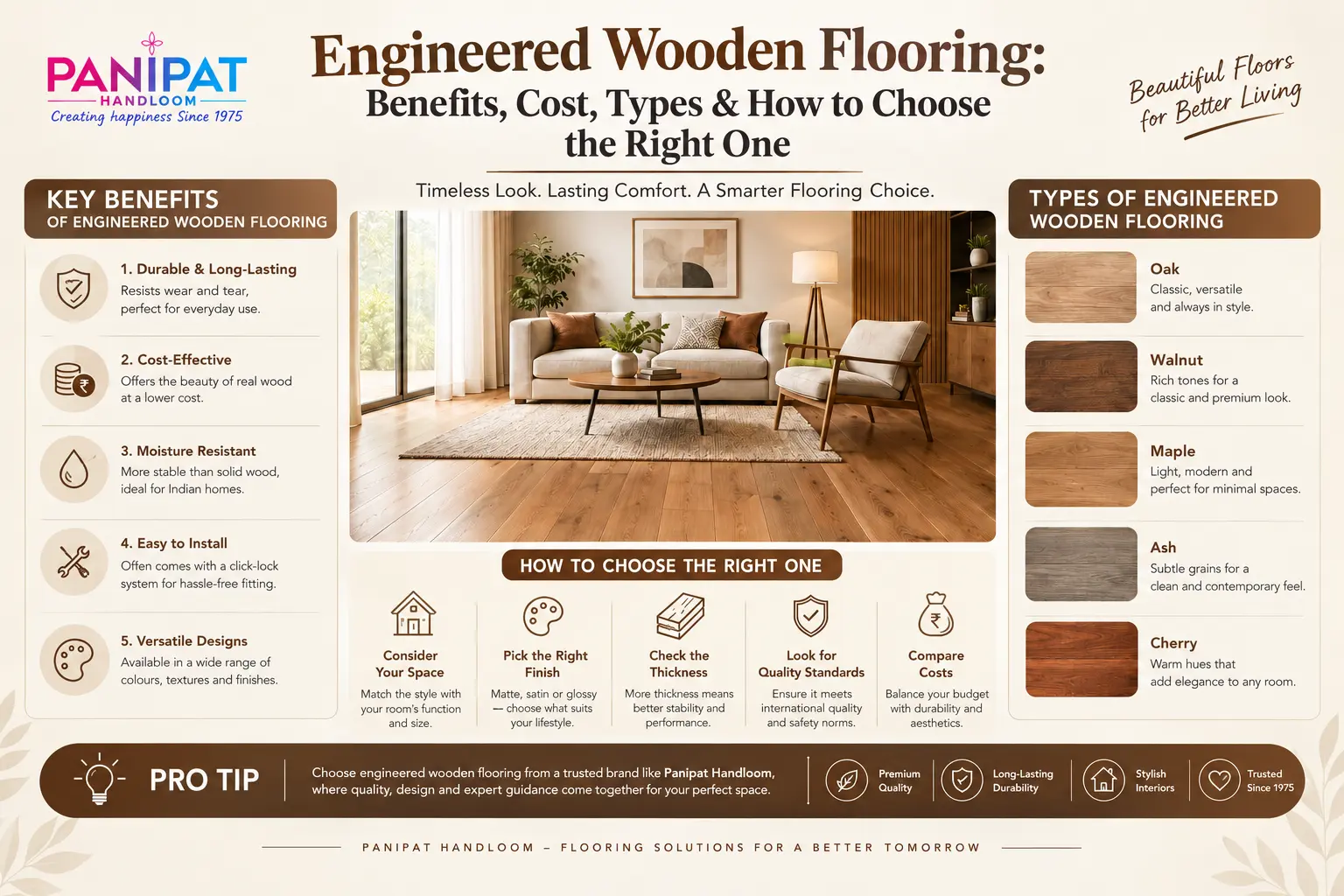
Walk into most new apartments in Delhi NCR right now and there's a good chance the floor under your feet isn't solid teak or oak — it's engineered wood. And honestly, most people can't tell the difference just by looking at it. That's kind of the point.
Engineered Wooden Flooring has quietly become the default choice for a lot of homeowners who want a wood floor but don't want to deal with the cracking, warping, and eye-watering price tag that comes with solid timber. If you're renovating a room or building a house from scratch, here's what you actually need to know before you buy — not the marketing version, the practical one.
So What Exactly Is It?
Think of it as plywood with a real wood face. Underneath, you've got several thin layers of wood glued together with the grain running in alternating directions — a bit like how plywood is made. On top sits a slice of genuine hardwood, sometimes just a couple of millimetres thick, which is what you actually walk on and see.
Because of that cross-layered base, the plank doesn't move around much when the weather changes. Solid wood swells in monsoon and shrinks in peak summer; engineered wood mostly shrugs it off. That's the whole reason it exists.
One thing people often confuse it with is laminate. They look similar in photos, but laminate is basically a photograph of wood printed on paper and sealed under plastic. Engineered flooring has actual wood on the surface. You can sand it down and refinish it later — laminate, you can't.
Why People Choose It Anyway
There isn't one single reason — it's usually a combination of things:
- It holds up better in humid conditions than solid wood, which matters a lot in most Indian cities.
- Installation is quicker. A lot of it uses click-lock planks that snap together, so you're not always dealing with nails or wet adhesive.
- It costs noticeably less than solid hardwood while still giving you real wood on top.
- It plays nicely with underfloor heating, if that's something you're planning — solid wood often can't handle the temperature swings.
- A decent quality floor, looked after properly, will outlast most furniture in the room.
To be fair, it's not flawless. The top veneer can only be sanded and refinished a handful of times before you're through to the base layer, so it's not a "forever" surface the way thick solid wood can be. But for most homes, that's not really a dealbreaker.
What Does It Actually Cost?
This is where people get frustrated because the range is huge — anywhere from roughly ₹150 to ₹450 per square foot before installation, and that's a big spread. A few things push the price up or down:
Wood species on top. A veneer of oak or walnut is going to cost more than something like maple.
Veneer thickness. A thicker top layer means more life left in it for future refinishing, so naturally it's priced higher.
How many plies it's built from. More layers generally means a sturdier, more stable plank — and a steeper bill.
Finish. Oiled and hand-scraped finishes tend to sit at the premium end; a basic lacquer finish is cheaper.
Warranty and brand reputation. Established names with longer guarantees will cost more, but you're also less likely to get stuck with a warped batch six months in.
My honest suggestion — get quotes from at least two or three suppliers before deciding anything. Prices swing quite a bit even within the same city, and installation charges are often quoted separately, so ask about that upfront rather than after the floor's already down.
The Different Types You'll Come Across
Two-layer engineered wood is the simplest and cheapest version — a plywood base with a veneer on top. Fine for lower-traffic rooms like a spare bedroom.
Three-layer engineered wood adds another core layer underneath, which makes it noticeably tougher. This is usually what gets recommended for living rooms or hallways where people walk through constantly.
Multi-ply engineered wood stacks several thin layers together for maximum stability. You'll see this more in offices or commercial spaces where the floor takes a real beating.
Herringbone and chevron layouts aren't really a different type of wood, but a different way of laying it. They've become popular for bedrooms and living rooms where people want the floor itself to be a design feature, not just a background surface.
Picking the Right One for Your Space
There's no single "best" engineered floor — it really depends on the room. A few things worth thinking through before you commit:
- How much foot traffic does the room actually get? A living room needs a tougher, thicker top layer than a guest bedroom that's used twice a year.
- Is there moisture involved — a kitchen, a balcony that's semi-open, a bathroom-adjacent hallway? If so, look specifically for flooring rated for moisture exposure, not just the standard version.
- Does it actually match the rest of the room? Pull up a sample next to your wall colour and any existing panel for wall you've already installed, because tone mismatches are hard to notice on a screen but obvious in person.
- What finish suits your household? A matte or oiled finish hides scuffs and scratches far better than a high-gloss one, which is worth knowing if you've got kids, pets, or both.
- How's it going to be installed — glued down or floating? Floating floors are easier to replace later if a section gets damaged.
- What's the warranty actually cover? Read the fine print here, because "10-year warranty" sometimes only covers manufacturing defects, not wear from normal use.
The Rest of the Room Matters Too
Here's something that gets overlooked — a beautiful floor can still make a room feel unfinished if nothing else in the space complements it. A few small additions tend to make a bigger difference than people expect:
A textured panel for wall behind the bed or sofa gives the eye something to land on, especially against a plain wood floor that might otherwise feel a bit flat. Wooden blinds on the windows carry that same natural material through the room without it feeling matchy-matchy. And if you're already redoing the room, it's worth taking a look at your bedding too — sometimes the easiest way to refresh mattress comfort isn't buying a whole new one, just adding a good topper or protector, which makes an older mattress feel considerably newer.
At Panipat Handloom, this is generally how we'd approach it — flooring, walls, windows, and bedding as one connected decision rather than four separate shopping trips.
Bottom Line
Engineered wooden flooring is a genuinely good middle ground — real wood on top, better behaviour underneath, and a price that doesn't require dipping into savings. Spend a bit of time comparing thickness, finish, and warranty terms before buying, and don't rush the installation quote either. Once it's down, small touches like a wall panel, a set of wooden blinds, or even just refreshed bedding are usually what push a room from "looks fine" to "looks finished."
Frequently Asked Questions
- Is engineered wooden flooring waterproof?
Not fully — but it handles humidity and occasional spills much better than solid wood because of its cross-layered core.
- How long does engineered wooden flooring actually last?
Somewhere between 20 and 30 years with reasonable care, though this depends heavily on the veneer thickness and how well it's installed.
- Can I install it directly over my existing tiles?
Usually yes, especially with floating installation, as long as the tile surface is level and free of major cracks or gaps.
- What's the real difference between engineered wood and laminate?
Engineered wood has genuine wood on its surface, while laminate is a printed image under a protective layer — so engineered wood looks and ages more authentically, but costs more.
- Does engineered wood flooring suit Indian weather?
Yes, that's actually one of its biggest advantages — it resists the warping and gapping that solid wood often suffers through humid monsoons and dry summers.
- Can it be sanded and refinished later?
Yes, but only a few times, since you're limited by how thick the top wood veneer actually is.
- How do you clean and maintain it day to day?
Regular sweeping plus an occasional damp mop with a wood-safe cleaner is usually enough — just avoid letting water sit on it.
- Is it a sensible choice for kitchens?
It can work if you pick a moisture-resistant variant, though areas right next to the sink may still need extra protection or a mat.
- Does it add resale value to a home?
Generally yes — buyers tend to notice good flooring, especially when it's paired with interiors that feel cohesive rather than mismatched.
- What thickness should I actually go for?
For most homes, 14–19 mm overall with a 3–4 mm top veneer strikes a good balance between durability and refinishing options down the line.