
Wall Panels vs Wallpaper vs Paint: Which Wall Finish Should You Choose?
A client once told me she repainted her bedroom four times in two years because she kept second-guessing the shade under different lighting. Another family two houses down went with textured panels once, ten years ago, and haven't touched that wall since. Same basic decision — wall finish — completely different relationships with it afterward.
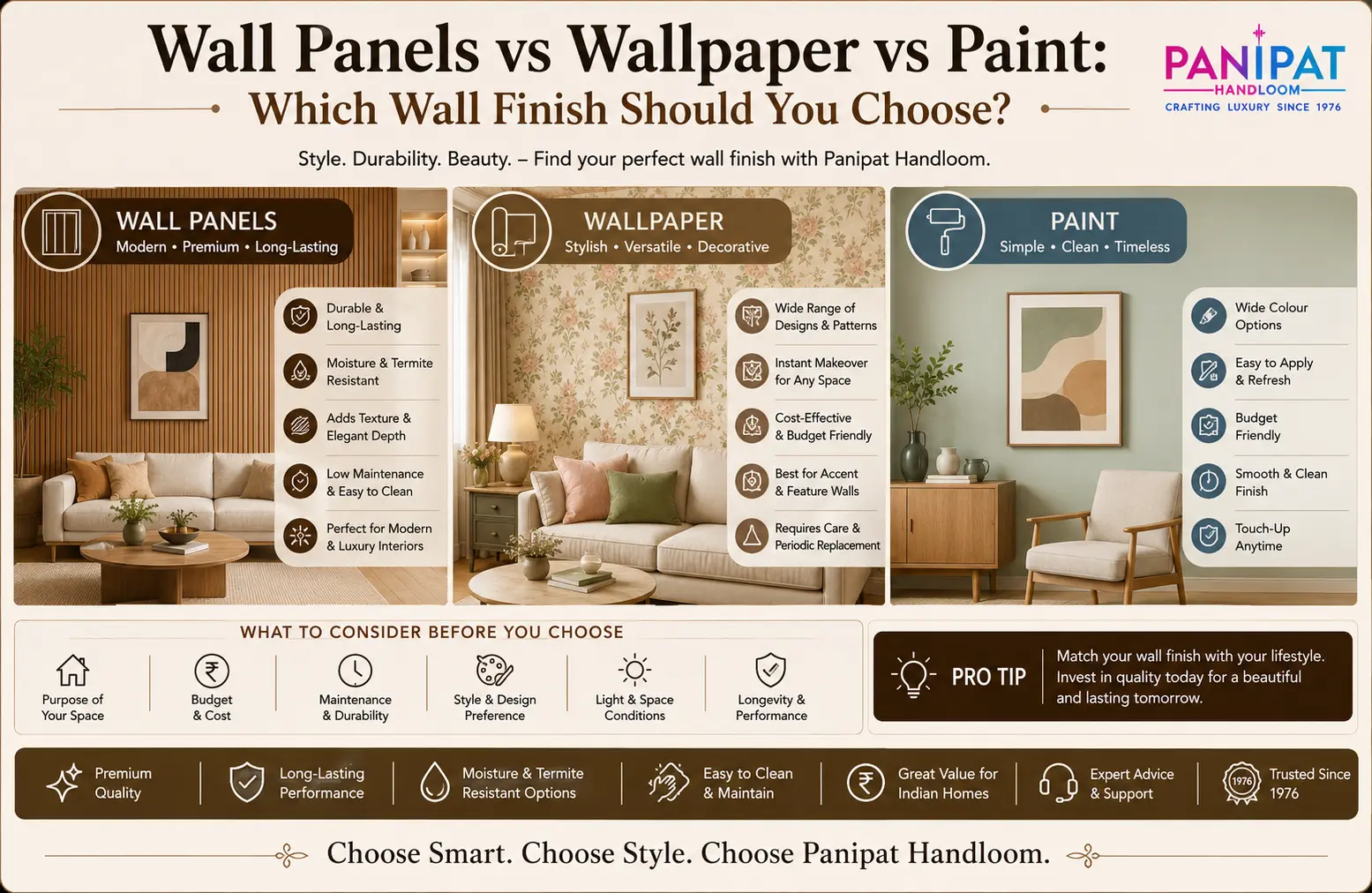
That's really the heart of this whole choice. Paint, wallpaper, and wall panels aren't just three price points on a spectrum; they're three different kinds of commitment. Here's how they actually play out once they're on your wall and you're living with them, not just looking at a sample swatch.
Paint
Nothing dramatic to report here, which is the appeal. You buy a few cans, tape off the skirting boards, get it done over a weekend, and move on with your life. It's forgiving too — mess up an edge and you just go over it again.
Where it falls short is durability, and this only becomes obvious with time. The wall behind your sofa fades a shade lighter than the rest after a couple of monsoons of sunlight through the curtains. Fingerprints near the switchboard stop coming off with a damp cloth. None of it is catastrophic, but it adds up, and eventually you're repainting anyway — usually sooner than you planned.
It also stays flat. No texture, no shadow lines, nothing to catch your eye except colour. Fine for a rental. Less fine if you want the wall itself to be a feature.
Wallpaper
This is where a wall stops being background and starts being a talking point. A good pattern changes how a whole room reads — suddenly a plain bedroom has a mood, an entryway has some personality.
There's a tier of wallpaper that goes even further than decorative — Versace wallpaper and Roberto Cavalli wallpaper fall into this category, leaning into bold, almost theatrical prints rather than anything understated. It's not for every room, and it's definitely not the budget pick, but if you want one wall that looks like it wandered in from a much more expensive apartment, this is how you get there.
What surprises people is the installation. Any bump or unevenness in the wall shows up under wallpaper almost immediately, so the prep work matters more than most people expect going in. Seams need lining up. Humidity is not this material's friend, so bathrooms and kitchen backsplashes are usually a no unless you're using a specifically treated variety. And when you eventually get tired of the pattern — because patterns do get tiring — taking it down is its own weekend project, not a quick job.
Wall Panels
Ten years ago, panels basically meant plain wood cladding and not much else. Now, with materials like WPC panels, you get something that looks like wood or stone without actually behaving like either — it won't warp when the humidity spikes, termites have no interest in it, and cleaning usually means wiping it with a damp cloth once in a while.
That's really the whole pitch: you install it, and then you mostly forget about it. No annual touch-ups, no worrying about a bad monsoon season leaving a mark. For a TV wall or an accent behind the headboard, it holds up in a way paint and wallpaper both struggle to match over the long run.
The cost is the obvious catch — panels run higher upfront than either of the other two options, especially across a full wall rather than one accent section. And it's not something you casually swap out if your taste shifts next year. Once it's up, that's the wall for a while.
So Which One?
Honestly — depends what you're optimizing for. Budget and flexibility point toward paint. Personality and visual impact point toward wallpaper. Low maintenance and staying power point toward panels.
Plenty of homes just use all three: panels behind the TV, a statement wallpaper in the bedroom, plain paint in the hallway and kids' rooms where things get repainted anyway. It tends to look more deliberate than picking one finish and using it everywhere, and it spreads the budget out a bit too.
Don't Skip the Windows
It's easy to spend all your attention on walls and forget the windows are doing half the work in how a room feels. Customized blinds for windows are worth planning alongside your wall finish rather than as an afterthought — they control light and privacy, sure, but they also either match or clash with whatever texture you've put on the walls. A panelled wall with visible wood grain, for instance, usually looks better next to something clean and minimal than heavy curtains competing for attention.
Final Word
There's no single right answer here, and anyone telling you otherwise is probably selling something. What matters more is being honest about how much attention you want to give your walls a year from now — repainting doesn't bother some people at all, while others would rather pay more upfront and never think about it again. At Panipat Handloom, the homes we've worked on that turned out best weren't the ones that picked the "trendiest" finish — they were the ones that matched how the people actually live in the space.
FAQs
1. Which lasts longer—wall panels or wallpaper?
Wall panels, particularly WPC panels, generally last longer than wallpaper. They offer better resistance to moisture, pests, and everyday wear, making them a durable choice for long-term interiors.
2. Is paint really the cheapest wall finish?
Yes, paint is usually the most budget-friendly option upfront. However, it may require repainting every few years, so long-term maintenance costs should also be considered.
3. Can wallpaper be used in a bathroom?
Yes, but only specially treated, moisture-resistant wallpaper should be considered for bathrooms. Standard wallpaper can absorb moisture and may peel or lose its finish in humid conditions.
4. What makes Versace or Roberto Cavalli wallpaper different from regular wallpaper?
Luxury wallpaper brands such as Versace and Roberto Cavalli are known for distinctive patterns, rich textures, and high-fashion-inspired designs. They are ideal when you want your walls to become a statement feature.
5. How long do WPC wall panels typically last?
With proper installation and basic maintenance, quality WPC wall panels can last for a decade or more while maintaining their appearance and structural performance.
6. Can wall panels be installed as a DIY project?
While DIY installation is possible for some products, professional installation is generally recommended. Proper alignment, cutting, and fitting are important because visible gaps or uneven panels can affect the final look.
7. Is removing old wallpaper difficult?
It depends on the wallpaper and adhesive used. Some wallpapers can be peeled away relatively easily, while others may require steaming, soaking, or careful scraping to remove completely.
8. Do window blinds affect the overall look of a room?
Absolutely. Well-chosen blinds can complement your walls, furniture, and overall colour scheme. Customized blinds can help create a more coordinated and finished interior.
9. Which wall finish is better for a modern interior?
WPC wall panels are a popular choice for modern interiors because of their clean appearance, contemporary textures, durability, and relatively low maintenance requirements.
10. Can paint, wallpaper, and wall panels be used together?
Yes. Combining different wall finishes can create visual contrast and define different areas of your home. For example, you can use panels on a feature wall, wallpaper in the bedroom, and paint in the remaining spaces.